The Order That Changed Everything
It started with a simple order. Well, I thought it was simple.
Back in early 2023, one of our physical therapy leads asked me to order a replacement spirometer. We’d had a flood in the storage room, and the old one was toast. “Just get something decent,” she said. “The usual specs.”
I nodded, typed “spirometer” into our standard office supply portal, and picked the one with the most stars under $200. Took me maybe six minutes. Click. Done. Felt good.
That order ended up costing us about $1,800 in lost time, return shipping, and clinical scheduling headaches. Not to mention the look my Medical Director gave me when they found out what I’d done.
“This is not a stapler, Sarah.”
That’s what he said. And he wasn’t wrong.
The Background: Why I Thought It Would Work
I’ve been managing purchasing for a 3-location outpatient clinic network since 2020. Before that, I did general office administration for a law firm. In that world, orders are pretty straightforward: pens, paper, toner, the occasional printer. You find the cheapest reliable option, you order it, it arrives, you’re done.
When I took over purchasing here, I applied the same philosophy. For office supplies, it worked fine. But clinical equipment—that’s a different animal, and I didn’t realize it until after I’d burned myself.
I manage roughly $120,000 annually in purchasing across about 15-20 different vendors. About 40% of that is clinical equipment and supplies. The rest is everything from exam table paper to breakroom coffee. We’ve got 3 locations with about 80 clinical staff total, plus admin.
Before 2023, I’d done a lot of office supply orders. I’d done some minor clinical stuff—gloves, sanitizer, basic wound care kits. But I’d never ordered actual diagnostic equipment before. That spirometer order was my first, and it showed.
The Process: What Actually Happened
The spirometer arrived in 4 days, right on schedule. Looked fine in the box. I sent it to the clinical team, proud of my efficiency.
Three hours later, I got an email from the lead PT. “This doesn’t meet our specs.”
Turns out, the “spirometer” I’d ordered was a basic handheld peak flow meter. Not the diagnostic-grade device they needed for pulmonary function testing. The one I bought was maybe fine for a quick asthma check at a GP’s office. We needed something that could measure FVC, FEV1, generate a flow-volume loop, and interface with our EMR system.
I hadn’t asked. I’d assumed “spirometer” meant “spirometer.” Stupid, in hindsight.
I checked the return policy. Restocking fee: 25%. Plus, the clinical team had already desterilized the packaging (not that it was sealed sterile, but they’d opened it). And shipping back a device like that? The vendor wouldn’t take it unless it was in “resalable condition,” which meant original packaging. We didn’t have it anymore.
Long story shorter: we ate the cost of that order—about $180 after fees and shipping. But that wasn’t the real cost. The real cost was the scheduling mess. The PT had to cancel 2 days of pulmonary assessments because we didn’t have a working device. Those patients had to be rescheduled, which pushed their follow-ups out by 6 weeks. And that PT’s frustration boiled over in a meeting where she mentioned, in front of my VP, that “admin didn’t understand clinical requirements.”
Not my best moment.
The Turnaround: What I Started Doing Differently
After that fiasco, I went back to the drawing board. I asked the clinical team to give me a “preferred specs” document for frequently ordered equipment—spirometers, clinical chemistry analyzers, patient monitors, wheelchair types. One of our nurses literally printed me out a binder. A binder. But honestly? Best resource I’ve ever had.
It took me 3 years and about 150 orders to understand that vendor relationships matter more than vendor capabilities. But it took me just one spirometer disaster to understand that clinical equipment is not office stationery.
Here’s what changed:
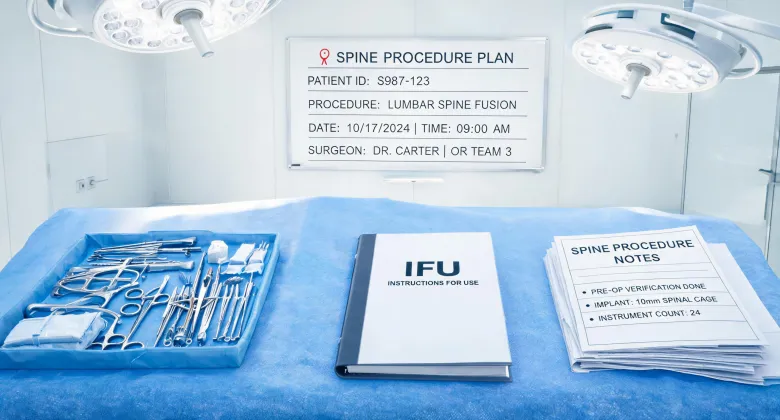
- I started using clinical-specific vendors. For general supplies, I still use our standard office supply vendor. But for clinical equipment, I maintain separate relationships with vendors who specialize in that area. For example, when we needed to order surgical implants and instrumentation for a new spine program we were piloting, I worked directly with NuVasive’s clinical services team. Their billing process was different—more codes, more pre-authorization steps, more documentation needed—but once I understood the NuVasive Clinical Services billing workflow, it was actually smoother than trying to force it through our general vendor system.
- I stopped relying on price-first decisions. The cheapest spirometer was a disaster. When we needed a clinical chemistry analyzer for our lab, the unit price was significant—around $4,500 on the low end—but I focused on total cost of ownership: calibration costs, service contracts, annual maintenance, consumables. The “expensive” option ($7,200) actually had lower long-term costs because the consumables were cheaper and the service contract covered more.
- I learned the wheelchairs are not a one-size-fits-all purchase. When a PT asked me “how to choose a wheelchair,” I initially thought “measure the patient, pick a size, job done.” Nope. Between manual vs. power, transit vs. standard, weight capacity, seat-to-floor height, adjustability, and transportability—there’s genuinely a lot to evaluate. The spec sheet I got from our OT department listed 14 criteria. Now I don’t order a wheelchair without a clinician’s sign-off on a spec checklist.
The Result: Where We Are Now
As of late 2024, our equipment returns are down about 70% year-over-year. Our clinical staff satisfaction with purchasing is up (they don’t tell me that directly, but the complaints have stopped, and our VP mentioned it in a review). And I’ve reduced the number of vendors I work with from about 22 down to 12 for clinical stuff—each one selected for specialization, not just price.
That NuVasive partnership has been a case in point. When we started working with them for the spine pilot, I was nervous because their ordering process felt more complex than what I was used to. More clinical information required, more documentation on technique preferences (we mainly use TLIF and ALIF approaches), and a billing structure that involved NuVasive Clinical Services billing codes I’d never seen before. But once I sat down with their rep and walked through the process step by step, I realized the complexity was a feature, not a bug. They were capturing exactly what was needed so nothing got rejected or delayed downstream.
The surprise wasn’t the price difference between a cheap spirometer and a proper clinical one. It was how much hidden cost came with the wrong purchase—scheduling disruptions, clinical credibility, staff morale. That $180 spirometer probably cost us $1,800 in real terms.
I still use our standard office supply vendor for paper and toner. But for anything clinical—whether it’s a spirometer, a chemistry analyzer, or a replacement wheelchair—I route it through our specialized clinical vendors. And I always, always get spec sign-off from the clinical lead first.
It took a $180 mistake and a meeting that made me look bad in front of my VP to learn that lesson. But hey, I haven’t repeated it since. And that’s the kind of experience you can’t get from a checklist.
Prices referenced above are from vendor quotes obtained in Q2 2023 and Q3 2024; verify current pricing as rates and model availability may have changed. Regulatory guidance on clinical equipment procurement varies; consult with your clinical leadership for specific requirements.