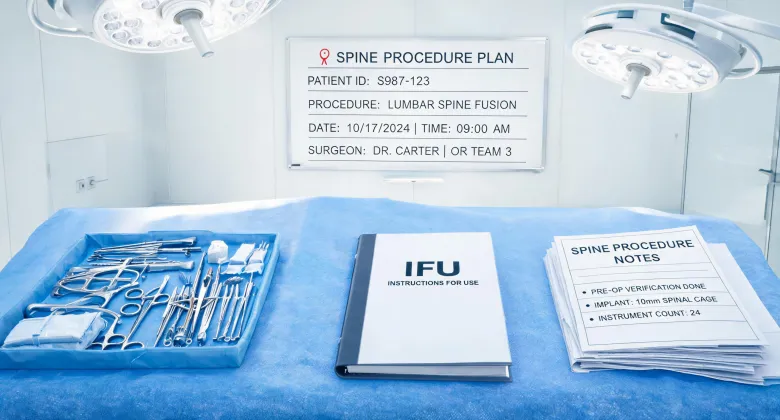
When I took over purchasing for a 60-person outpatient surgical center in 2020, I made the same mistake a lot of administrators make when they start. I thought my job was to get three quotes, line them up by price, and pick the lowest number. A surgeon fixed that for me.
I had a request from the spine team to evaluate a new system. The first quote came in well below the incumbent. I was proud of the negotiation. When I brought the comparison to the surgeon, she barely looked at the price. She asked three questions: What training is included? How long has the vendor supported it? Who responds when a case is on the table? I couldn't answer any of them. The quote sat on my desk for another week while I went back to the vendor for what should have been basic information.
The Surface Problem: Price Looks Like the Whole Story
Most buyers focus on the sticker price and completely miss setup fees, integration costs, training, and service contract costs that can add 30-50% to the total (which, honestly, is a conservative range in medical equipment). The question everyone asks is what's your best price? The question they should ask is what's included in that price? In my old thinking, price was a number. In medical equipment, price is a beginning.
A surgeon once told me: I don't need the cheapest system. I need one that gets me through the case and gets the patient home healthy. If it doesn't do that, it's not a bargain at any price.
What's Really Going On Under the Quote
After a few expensive lessons, I started to see why medical procurement is different from buying office supplies. There are four reasons the sticker price doesn't tell the truth.
Medical Equipment Is Not a Commodity
Paper clips are a commodity. An intraoral scanner isn't. The cheaper scanner might produce fine images, but if it doesn't export cleanly to your practice management software, you've bought a problem. The extra staff time to work around it can cost more than the price difference. Integration with the rest of the office isn't an afterthought; it's the entire point.
The Clinical Buyer Is Not the Person Signing the PO
The person who uses the device usually has the strongest opinion. In a hospital, that's a surgeon or an imaging tech. In a dental practice, that's the dentist or hygienist. If procurement picks a system without clinical input, you'll hear about it at the worst moment. Training costs go up. Rescheduled cases follow. In one project, I watched a good relationship with an office manager disintegrate because the new device workflow didn't match how the front desk organized patient records. The cheapest option wasn't cheap at all.
Vendor Landscape Changes Midstream
Here's the part I didn't think about when I started: product lines change because companies change. The Globus Medical NuVasive merger is a good example. According to publicly available merger announcements (as of January 2025), Globus Medical and NuVasive are now one company. If you're evaluating a spine system, searching globus medical nuvasive merger details tells you that two major spine companies are now one organization. The combined portfolio is broader, but for a purchasing manager, it also means new contracts, possible part number changes, and service transitions. Honestly, I'm not sure why medical device pricing is so opaque. My best guess is that list prices are intentionally high so the discount feels meaningful. Whatever the reason, you can't rely on the list price. You also can't rely on the old loyalty of a product line staying where it is.
Training and Documentation Are Part of the Device
When a vendor sends a technique guide like the NuVasive Reline surgical technique PDF, that's not just a formality. It shows what training is required. If the surgeon has never used that approach, the real cost includes a proctor or a rep in your OR. If the training path isn't clear, that's a red flag. I've started treating training documentation the same way I treat service contracts: if it's not attached to the quote, it doesn't exist.
What Ignoring These Layers Costs You
One of my first capital purchases was a comparison between two imaging systems. The cheaper vendor saved us $18,000 on the quote. By the end of the first year, we had paid:
- $6,400 in last-minute shipping for replacement parts
- $4,100 in extra staff time because the software didn't integrate with our scheduling system
- $9,800 to send a second technician to training because the original vendor's training was tied to an older product
Those weren't exotic costs. They were the normal concealed expenses in a purchase that every vendor knew about. The cheaper system ended up costing $2,300 more before depreciation. The finance team stopped asking why I wanted more budget up front.
An AED defibrillator is a clearer example. Nobody in their right mind buys a life-safety device based on a price tier alone. The cost of pads expiring without a restock plan, or a battery failing during a mock code, is not a procurement metric. It's a liability. But plenty of offices will accept the lowest AED quote because they think a defibrillator is a defibrillator. It isn't. The service contract, battery replacement schedule, and staff training are part of the device.
If a physician asks what is nuclear medicine while evaluating a new diagnostic service, that's a signal. The real question is whether the facility can absorb licensing, radiation safety, staffing, and reporting requirements. That's the same trap as the intraoral scanner, just with bigger numbers.
What I Do Now
Build a Total Cost Sheet
I still compare quotes. But I add a row for each of the following:
- training (initial and refreshers)
- service response time and contract
- consumables and their shelf life
- integration and software updates
- replacement part availability
- the vendor's product roadmap after any merger
Then I ask the vendor to sign off on each line. If they say it's not included, I know the true cost. If they say it is included, I want it written into the PO.
Ask the People Who Use It
Before we sign anything, I send the vendor's documentation, like the NuVasive Reline surgical technique PDF, to the relevant clinician. I ask: Does this fit with your current technique? Would you feel comfortable using it next week? If the answer is no, price is irrelevant. I also ask the front-desk or scheduling team how the product affects their workflows. They often catch integration problems before the clinical team does.
Verify the Vendor's Stability
After a merger, I don't assume the old web page still works. I check the merger announcement date, the product transition list, and whether customer support has changed. For the Globus Medical NuVasive merger details, I'd start with the companies' investor relations pages and then talk to your rep. If a rep can't tell me how the merged company handles support, I take that as a signal to slow down.
Get It in Writing
In my 2024 vendor consolidation project, the biggest lesson was that verbal promises don't survive contact with the invoice. Now every commitment—training hours, service response time, upgrade rights—goes into the PO. It feels awkward at first. It's worth it. (note to self: never schedule go-live before the contract is signed) I also add a note about what happens if the product line changes hands.
The Cheap Quote Isn't the Real Cost
This worked for us, but our situation is a single-site surgical center with a relatively stable case mix. If you're a multi-hospital network with system-wide purchasing, the calculus might be different. You'll have more leverage, but you'll also have more moving parts.
The lowest quote isn't the real price. The real price is everything that happens after the purchase order. If you can't see what's included, that's a problem you're about to own.