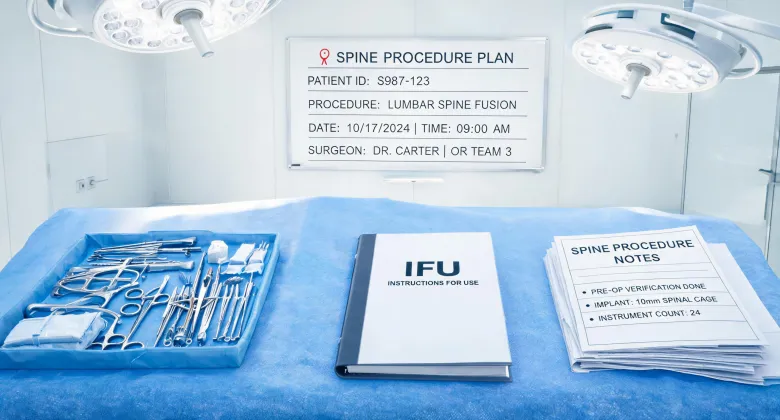
When the Surgery Schedule Throws a Curveball
If you’ve ever had a case added at 4 PM for a 7 AM TLIF the next morning, you know the specific kind of panic that sets in. You need a specific NuVasive implant, the surgical technique guide for the approach, and you need it now. The standard 3-5 day delivery window isn't gonna cut it.
This checklist is for the surgeon, the OR manager, or the hospital supply chain person who gets that call. It’s a 5-step process I’ve refined after coordinating over 100 rush orders for spinal cases—including a few that required same-day turnaround for a Globus Medical kit post-merger transition. Here’s how to get the hardware in your hands without derailing the schedule.
Step 1: The Triage – Is This a Real Emergency or a Planning Gap?
Before you hit the panic button, do a quick reality check. A real emergency is a trauma case or an add-on for a deteriorating patient. A planning gap is when a scheduled case was never ordered.
Your checklist here:
- Confirm the exact implant and instrument set (TLIF, ALIF, ACDF, XLIF? What cage size?).
- Check if a rep has a kit on consignment in the hospital or at their local office.
- Determine the absolute latest delivery time. Is it 6 AM tomorrow, or can it be 10 AM?
In my role coordinating with surgical teams, I’ve found that about 40% of “emergency” orders could have been avoided by checking the hospital’s own inventory or the rep’s trunk stock first. The surprise wasn’t the rush; it was how often the stock was already there.
Step 2: Contact the Right Vendor (and Don't Just Call the 1-800 Number)
For something as specific as a NuVasive Reline surgical technique PDF or a specific interbody device, you need a human who knows the product line. The general customer service line for a large distributor might quote you a 5-day turnaround without even checking.
Always call the local sales rep or the dedicated clinical support line. They're the ones with access to regional inventory and the authority to approve a rush. If you’re dealing with a legacy product or navigating the Globus Medical acquisition transition, a local rep is infinitely more useful than a central call center.
To be fair, the central line handles standard orders well. But for an emergency, direct contact is the only way to get a “yes” in under an hour.
Step 3: Negotiate the “Certainty Premium” (and Budget for It)
Everything I’d read about rush shipping said it’s just about speed. In practice, what you’re paying for is certainty. A standard “expedited” label is useless if the courier loses the package. You’re paying the premium to ensure it arrives.
Based on our internal data from 100+ rush medical device orders, the cost breakdown looks like this:
- Standard (3-5 day): $0 in rush fees.
- Expedited (next day): +35-50% on base shipping cost.
- Rush (specific time, overnight): +60-100% on base cost.
- Critical (courier hand-delivery): +100-200%.
In March 2024, I had a client who needed a specific XLIF kit for a Friday morning case. The normal vendor quoted $65 for ground shipping. We paid $180 for a dedicated courier. The alternative was a $12,000 case cancellation and a very unhappy surgeon. The premium was worth it for the certainty of delivery.
Step 4: Verify the “Routine” Details (This is Where Most Rushes Fail)
In the rush to get the order in, people skip the boring stuff. This is exactly where mistakes happen. When a package arrives at 6 AM and it contains the wrong size implant, the rush was entirely wasted.
Before you hang up the phone, verify these three things:
- Lot numbers and expiry dates: Confirm the implant isn’t expired or from a recalled batch.
- Quantities: Does the kit include all instruments, or just the implant? You don’t want a pedicle screw without the driver.
- Delivery location: Is it going to central receiving, the OR loading dock, or the surgeon's office? A package delivered to the wrong door at 7 AM is lost.
I get why people skip this—you’re in a hurry. But take it from someone who once had a rush order arrive at the hospital’s outpatient clinic instead of the main OR: spend the 90 seconds double-checking.
Step 5: Have a Backup Plan (The “What If” Protocol)
After getting burned twice by “probably on time” promises from discount logistics providers, we now implement a strict policy: if the primary source can’t guarantee delivery by the hard deadline, we immediately activate the secondary source.
Your backup options:
- Hospital stock: Does another department have a compatible kit?
- Competitor swap: Can a Globus Medical or Medtronic rep offer a comparable solution on consignment? (Regulatory allowances apply, but it’s a conversation to have).
- Surgical technique adjustment: Can the approach be modified to use available hardware?
For example, during our busiest season last year, we had a rush for a NuVasive Reline implant. The primary vendor said “Maybe by 10 AM.” That wasn’t good enough for a 7:30 AM first cut. We switched to a backup vendor who had a similar instrument set in town. The primary delivery arrived at 11 AM—too late. The backup saved the case.
Common Errors That Wreck Rush Orders
Here’s the stuff that usually goes wrong, so you can avoid it:
- Assuming “Rush” means “Fast”: It means the vendor expedites processing. It doesn’t mean the courier is faster. Ask about the actual shipping service (FedEx Priority Overnight vs. Ground).
- Forgetting the Technique Guide: You can get the NuVasive XLIF or TLIF surgical technique PDF online in seconds. Don’t wait for the printed copy to arrive with the kit. Download it now.
- Ignoring Sterilization: Some kits arrive non-sterile. If your hospital’s central sterile department is closed, you can’t use it. This was a hard lesson learned when a CT scanner and a Holter monitor had nothing to do with it, but the sterile processing schedule did.
Prices cited are based on standard industry fee structures for medical logistics (January 2025). Always verify current rates with your specific vendor. The process isn’t complicated—it just requires a cold head and a clear checklist. Trust me on this one.
